
ICE opened a CDL fraud hotline on September 9. The crashes that prompted it exposed something deeper: a decade of states issuing commercial licenses to people the federal government told them were no longer legally present.
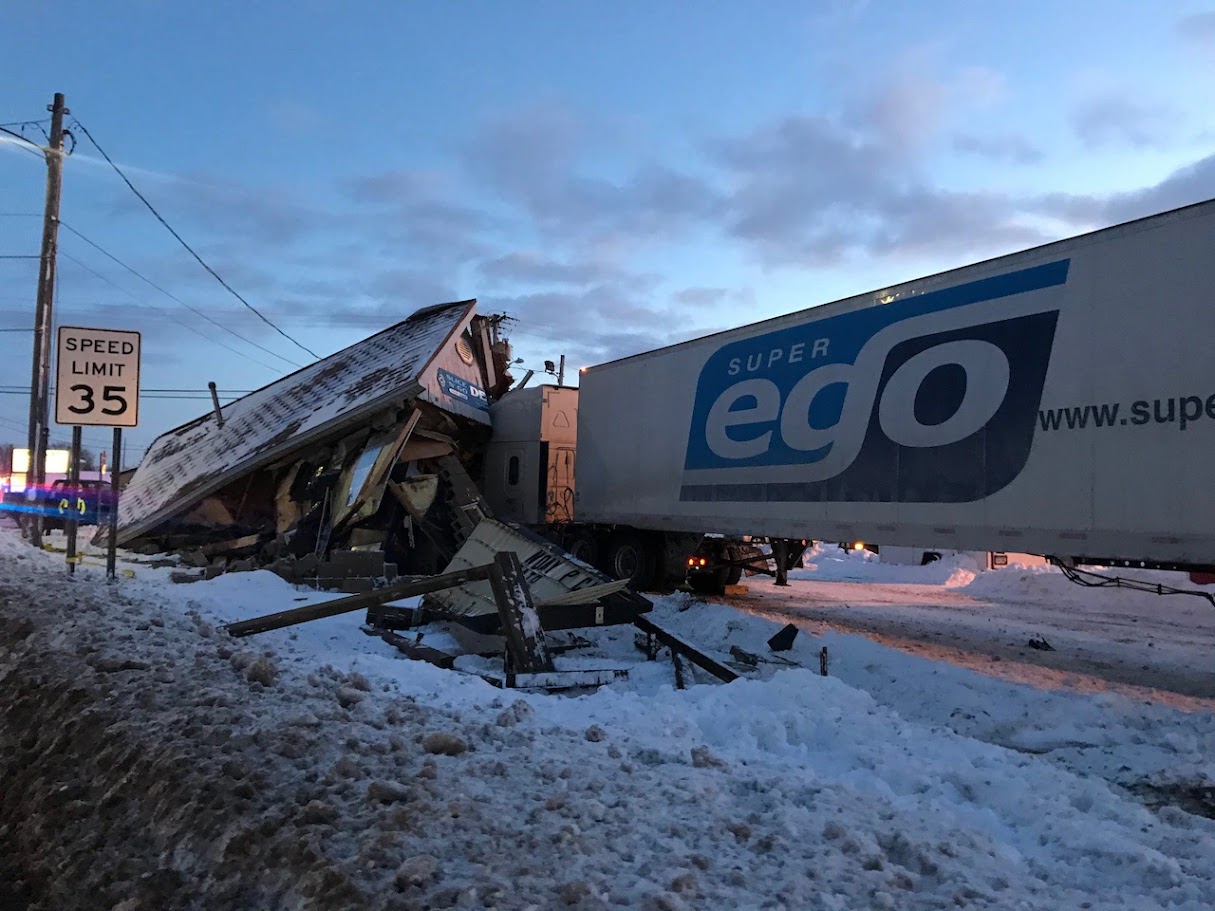
The tip line is a major advance in cross-departmental cooperation, 287G, etc., and while it will help with what’s already in the closet, the front door still needs work. On July 1, 2026, a tractor-trailer driven by Michael Bon veered off Interstate 81 in Schuylkill County, Pennsylvania, and struck State Trooper Michael Pahira Jr. while he stood beside a truck he was inspecting on the shoulder. Pahira, a 44-year-old 20-year veteran, was pulled from beneath the burning cab by three nearby construction workers. He died hours later without regaining consciousness. Bon, a 33-year-old Haitian national living in Brockton, Massachusetts, held a commercial driver’s license that the Massachusetts Registry of Motor Vehicles had renewed in February 2026. His parole ended in June 2025. He’d refused to leave. The federal rule that would have closed the renewal window took effect March 16, 2026, six weeks after Bon’s renewal was approved. The crash happened July 1. That gap is the whole story.
On September 9, 2026, ICE’s Homeland Security Investigations announced a dedicated CDL fraud tipline: 866-347-2423. Americans can call it to report suspected commercial driver’s license fraud. The announcement is real, and the number works. It’s also the latest move in an enforcement campaign that has been accelerating since February, and understanding what it can and can’t do requires going back to where the problem was built.
A commercial driver’s license issued to someone who doesn’t live in the United States is called a non-domiciled CDL. Under 49 CFR Part 383, a state may issue one of these only to foreign nationals who have lawful presence in the U.S. under qualifying employment-based categories. That’s the rule on paper. What FMCSA’s 2025 Annual Program Reviews found when they went looking was something else. More than 30 states had issued tens of thousands of non-domiciled CDLs in ways that didn’t comply with federal regulations: licenses issued beyond the expiration of a driver’s lawful stay, licenses issued without verifying lawful presence at all, and licenses issued to people in immigration categories that weren’t supposed to qualify. The states named in the review included California, Colorado, Pennsylvania, South Dakota, Texas, and Washington. The compliance problem wasn’t a handful of rogue clerks. It was systemic, across the licensing agencies of multiple states, driven by programming errors, weak quality controls, and inadequate staff training. The industry term for a CDL issued outside those federal boundaries is a non-domiciled CDL issued in error. The human term is a credential handed to someone the federal government had already decided shouldn’t be driving a commercial truck on an American highway.
FMCSA responded with an interim final rule published February 13, 2026, under Docket No. FMCSA-2025-0622, RIN 2126-AC98. The rule sharply narrowed who qualifies. Going forward, a state can issue a non-domiciled CDL only to foreign nationals lawfully present in H-2A, H-2B, or E-2 nonimmigrant status, along with a narrow set of territory-domiciled applicants and drivers in states whose own CDL programs have been federally decertified. No other immigration status qualifies. Credentials issued in error, or maintained after a loss of lawful status, are subject to downgrade by the state licensing agency under the amended standards. A final rule confirming those provisions was published March 16, 2026. States are expected to update procedures, staff training, and SAVE verification protocols accordingly.
Michael Bon’s timeline falls directly within that rulemaking. He entered the U.S. on July 2, 2024, admitted at Fort Lauderdale-Hollywood International Airport as a humanitarian parolee. He applied for Temporary Protected Status in October 2024; it was never granted. USCIS issued a Notice of Termination of Parole on June 13, 2025. Bon didn’t leave. In February 2026, he applied to renew his Massachusetts CDL. A Massachusetts RMV spokesperson told WVIA News that at the time of that renewal, Bon was approved under federal law as it stood then. The March 2026 final rule came six weeks later. On July 1, investigators say Bon’s rig left the roadway on I-81 and killed Trooper Pahira. ICE lodged a detainer on July 2. Bon faces charges including homicide by vehicle, involuntary manslaughter, recklessly endangering another person, and reckless driving. He’s presumed innocent of those charges; no court has found otherwise. His defense attorney told WVIA that Bon had a history of seizures and that his immigration status had nothing to do with causing the crash. That story belongs in the record. The record also shows the gap: a man whose parole was terminated in June 2025 held a valid Massachusetts CDL through June 2027.
Bon wasn’t the only crash DHS cited when it announced the tipline. In February 2026, Bekzhan Beishekeev, a Kyrgyzstan national, allegedly swerved into oncoming traffic in Pennsylvania and caused a head-on collision that killed four people, according to DHS. Pennsylvania had issued Beishekeev a commercial driver’s license. ICE arrested him in February. In November 2025, Rajinder Kumar, an Indian national, jackknifed his trailer in Oregon, killing a newlywed couple, according to DHS. California had issued Kumar a CDL; ICE arrested him in April 2026. In August 2025, Harjinder Singh, also an Indian national, made an illegal U-turn in a tractor-trailer in Florida and caused a crash that killed three people, according to DHS. California had issued Singh a CDL. DHS presents all four cases as examples of the problem the tipline is designed to address. Each named individual is presumed innocent of any charges not yet adjudicated by a court; the allegations above trace to DHS statements and charging documents, not verdicts. The record doesn’t establish the exact immigration pathway or CDL issuance process in each case, and those details matter for understanding what systemic fix would have changed the outcome.
The enforcement response has moved fast on multiple tracks simultaneously. In February 2026, FMCSA’s Operation SafeDRIVE removed nearly 2,000 unqualified truckers and vehicles from the road and resulted in 56 arrests. In late March, the first wave of Operation Highway Shield ran in Florida. The second wave, conducted July 28 through July 30 across freight corridors in Illinois, Indiana, Iowa, and Ohio, resulted in 51 illegal immigrants detained, 21 of whom held non-domiciled CDLs issued by California and New York, and 766 unsafe drivers and vehicles placed out of service, according to the FMCSA release. More than 30 additional drivers were cited for failing English-language proficiency requirements. Since April 2025, when President Trump issued an executive order directing enforcement of English-language proficiency regulations under 49 CFR Part 391, 26,000 drivers have been placed out of service for failing to speak basic English or read road signs, according to DOT. The English-language requirement isn’t new law. It’s been on the books for decades. Enforcement is what changed.
On August 31, 2026, Transportation Secretary Sean Duffy and DHS Secretary Markwayne Mullin announced the next layer at a press conference in Detroit. FMCSA executed the emergency removal of 110 CDL training schools from its national registry, schools tied to more than 5,000 drivers who later failed English-language proficiency checks at roadside. HSI is reviewing an additional 160 schools. HSI also issued inspection notices to more than 200 driving schools and CDL-related businesses across 23 states, targeting CDL fraud, identity-document fraud, unauthorized employment, and potential links to smuggling and trafficking networks. The Justice Department announced Joint Task Force Crossroads of America, pairing U.S. attorneys in Michigan, Ohio, Indiana, and Illinois with DOT, FMCSA, the FBI, DEA, HSI, ICE, and ATF to pursue trucking fraud along major Midwest freight corridors. FMCSA Administrator Derek Barrs described the 110 closed schools as the biggest offenders, each having passed at least 10 drivers who were later cited for English-language violations during roadside stops. The 160 additional schools are flagged for lacking proper space for driving tests or having unlicensed instructors.
The tipline sits at the end of that timeline, not the beginning. Mechanically, it routes tips to HSI, which already leads the national criminal investigation initiative under 3-4 of the August 31 announcement. The initiative covers CDL fraud, identity-document fraud, unauthorized employment, money laundering, labor exploitation, and potential cartel and smuggling ties. HSI has already moved on DMV employees: investigators have arrested state motor vehicle agency workers for allegedly accepting payments to help people bypass CDL requirements. The tip line gives the public a direct channel into that investigation stream. It doesn’t change the underlying regulatory fix: the February/March 2026 final rule on non-domiciled CDLs. It doesn’t retroactively revoke licenses already issued under the looser standards. And it doesn’t address the approximately 30-plus states that FMCSA found had issued non-compliant credentials, or tell you how many of those credentials are still active in the system. Those are the questions the rule is supposed to close over time, and neither the tip line announcement nor any of the operation results answer them yet.
The operator directive here is straightforward. If you’re running a carrier and you’re vetting drivers, pull the CDL issuance state and check it against the non-domiciled CDL compliance picture. California and New York accounted for 21 of the 51 non-domiciled detentions in the July Highway Shield operation alone, according to FMCSA. That doesn’t mean every CDL from those states is fraudulent. It means those states’ licensing agencies are named in the FMCSA compliance reviews, and the liability exposure for a carrier that tenders a load to a driver holding a credential issued outside federal standards is real. The hiring carrier selected that risk, intentionally or not. The tipline number is 866-347-2423. If you’ve got something to report to HSI, use it. If you want to understand your own exposure, the February 13, 2026 Federal Register rule under Docket No. FMCSA-2025-0622 sets the current eligibility standards. Read the final rule. Don’t wait for the next operation’s results to tell you what was on your fleet.


Leave a Reply