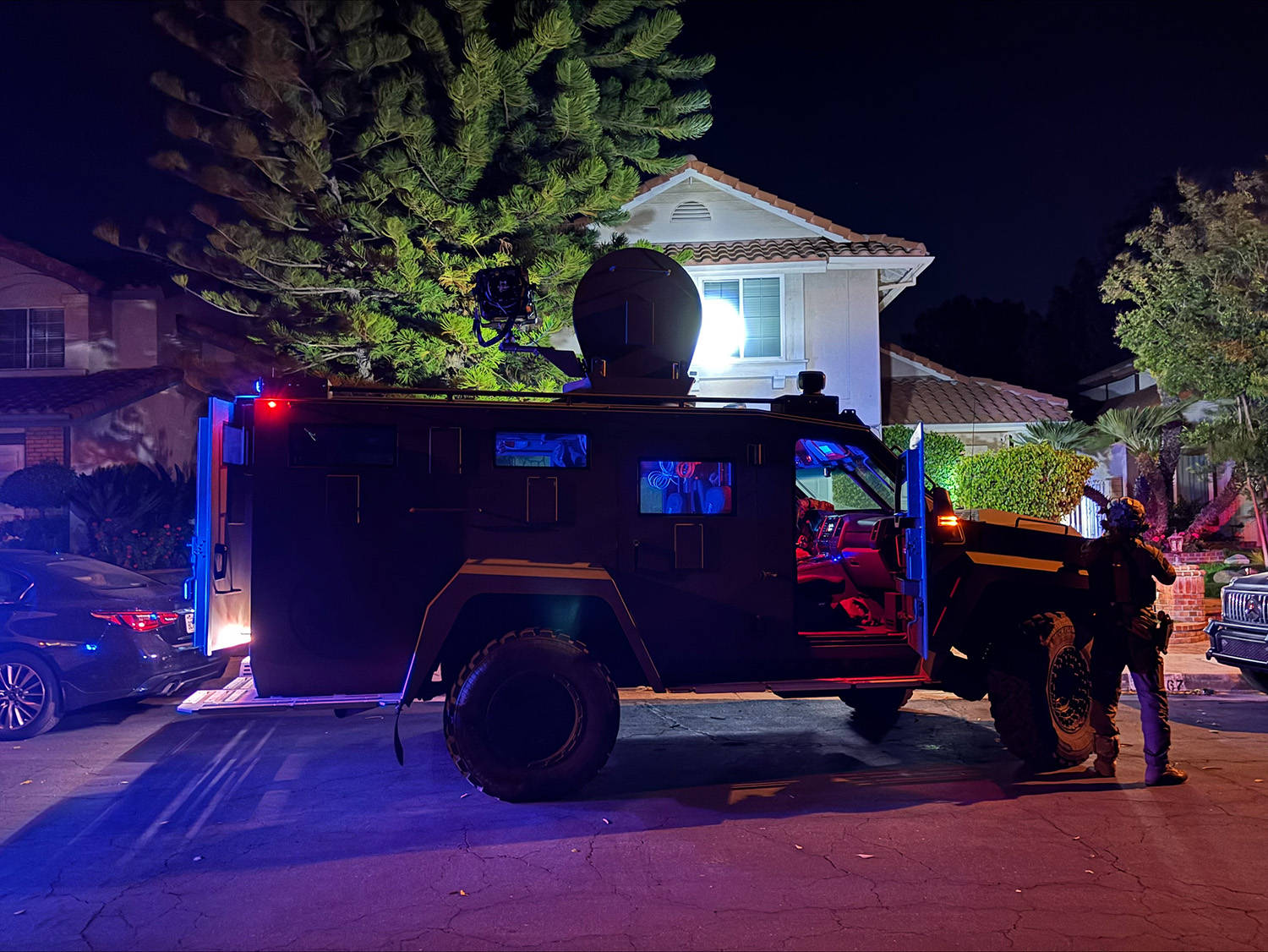
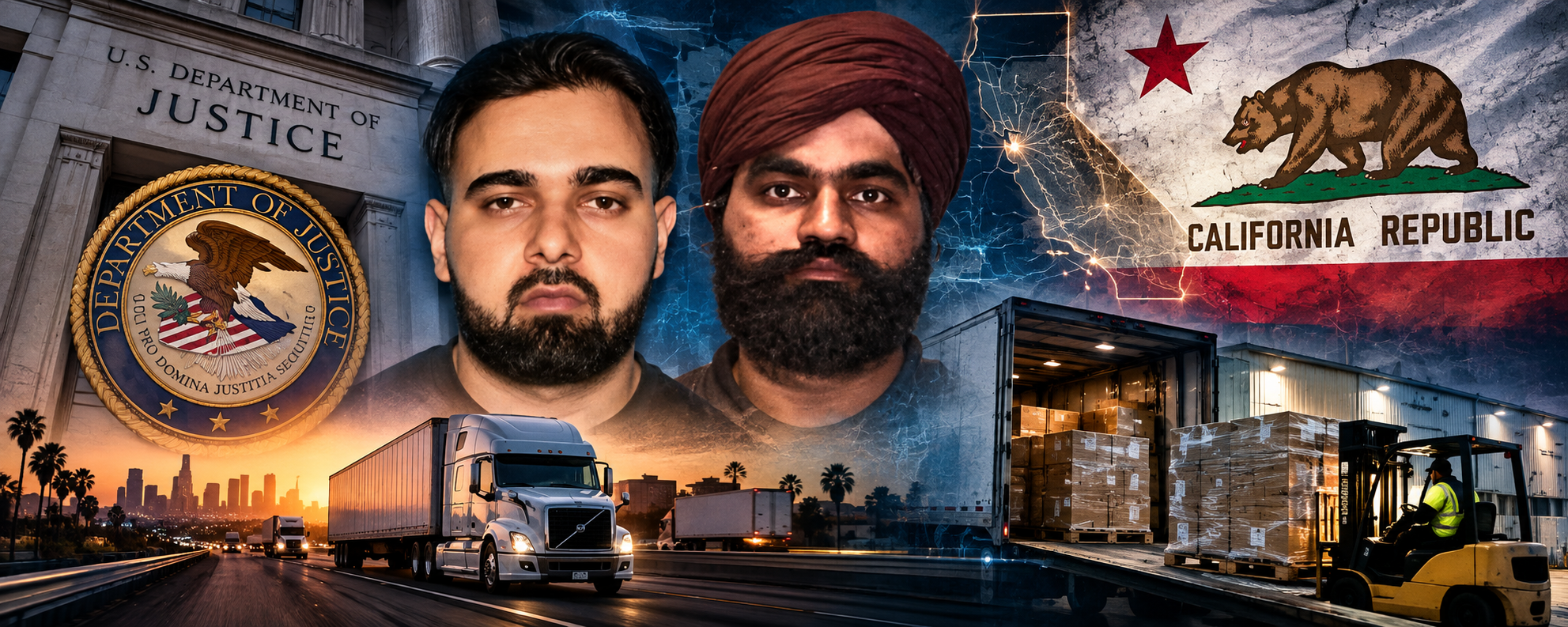
On the evening of July 7, 2023, a man stood on the balcony of a Los Angeles area residence and was shot. He survived. His name, according to the federal agents who spent the next two years building a case around his world, is Robert Amiryan, and the government describes him as one of the most prominent Armenian organized crime figures in Los Angeles County. The man federal prosecutors allege was behind the attempt, a rival named Ara Artuni, now sits at the top of a racketeering indictment that runs 126 pages, names sixteen defendants under a canopy of stacked aliases, and charges, alongside the murder-for-hire and machinegun counts, a cargo theft operation that Amazon estimates cost it more than $83 million.
Everything in this article describing the defendants’ conduct is an allegation. Nobody in United States v. Artuni, No. 2:25-cr-00434-JLS (C.D. Cal.), has been convicted of anything; every defendant is presumed innocent, and the trial now sits on a mid-2027 horizon. The reason this pending case anchors a series about cargo theft anyway is structural. The other cases in this series show freight theft as a crew’s business. This one is the government’s account, assembled in a 234-page agent affidavit and three successive grand jury indictments, of what the same business looks like when it’s a division of an enterprise, and of what else sits on that enterprise’s ledger.
The world the affidavit describes
The charging documents locate the case inside Armenian Organized Crime, which the government describes as an offshoot of the Russian mafia whose senior figures carry the title avtoritet, and whose American center of gravity is Los Angeles County, home to one of the largest Armenian communities outside Armenia and Russia. That framing carries an obligation this publication takes seriously: the enterprise alleged here is a criminal organization that preys on its own community first, and nothing in this case file indicts a community that is overwhelmingly made up of the people these schemes victimize, including in the trucking industry, where Armenian-American-owned carriers are a large and legitimate presence.
The affidavit, sworn by a Homeland Security Investigations agent and running 234 pages, describes a war between two local leaders, Artuni and Amiryan, over territory and standing in the San Fernando Valley, with the affidavit describing Artuni as seeking to advance his position with the backing of the Mexican Mafia. Its table of contents is a chronology of violence. July 21, 2020: a murder in Burbank, a second man surviving the same attack. October 25, 2022: an attempted murder at a Granada Hills residence. April 3, 2023: Amiryan was shot inside his own garage. June 6 and 7, 2023: the alleged kidnapping, assault, and torture of an Artuni associate by the rival group. June 12, 2023: a man shot while driving home. July 7, 2023: the balcony shooting, the event that anchored the original complaint charging attempted murder in aid of racketeering. Two more shootings followed that August. The affidavit also describes a tactic worth every investigator’s attention: the strategic use of non-Armenian street gang associates to carry out violence, precisely to break the pattern-matching that organized crime enforcement depends on.
The freight scheme
Inside that architecture, the government alleges, sat a revenue operation any reader of this series will recognize instantly. Members and associates of the Artuni Enterprise enrolled with Amazon as carriers, obtaining access to the retailer’s freight network the same way thousands of legitimate small fleets do. They contracted for trucking routes, took possession of loaded trailers, and then, per the indictment, diverged from the assigned route and stole all or part of the shipment. Amazon’s own estimate of its losses to this single organization, cited in the government’s filings, exceeds $83 million, a figure that dwarfs the admitted loss in the Inland Empire case this series covered last week by an order of magnitude, and one that describes thefts from a single victim.
The mechanics are identical to what Paramvir Singh admitted in his August 11 plea agreement sixty miles east: acquire carrier identity, enroll, book, take, divert. The scale is the difference, and so is the diversification. The same enterprise, per the charging documents, ran bank fraud and wire fraud schemes and a credit card bust-out operation, in which cards are run up against a sham business and the money extracted before the chargebacks land. Cargo was one product line among several, and the indictment’s structural claim, the one this industry has to metabolize whatever a jury eventually finds, is that carrier enrollment fraud and murder-for-hire shared an organization, personnel, and a treasury.
The takedown and the escalation
The overt phase began on May 20, 2025, when federal agents arrested thirteen people across California and Florida on five separate criminal complaints. The seizures announced with the arrests describe the enterprise’s operating posture better than any adjective: roughly $100,000 in cash, fourteen firearms, and three armored vehicles. Armored, for the men in this case, was not a figure of speech; the affidavit’s shooting chronology explains the fleet.
The case has since climbed through the grand jury three times, and the climb is the story. The initial indictment, returned June 3, 2025, already charged a full racketeering conspiracy under 18 U.S.C. § 1962(d) across sixty-seven pages. A first superseding indictment landed September 19 at eighty pages. The second superseding, returned October 7, 2025, runs 126 pages and sixteen defendants, and adds the counts that moved this case into a different weight class: murder-for-hire under 18 U.S.C. § 1958, use of a firearm causing death under § 924(j)(1), machinegun possession, and, in the indictment’s quieter corners, marriage fraud and visa fraud counts that describe how an enterprise imports and regularizes its personnel. Prosecutors from the United States Attorney’s transnational organized crime section signed the filings. Each superseding indictment restarts the clock and widens the net, and the progression from a balcony shooting complaint to a 126-page RICO architecture in five months tells you how much the government believes its cooperators and wiretaps have given it.
The machinery is now grinding at discovery scale. In June 2026 the parties jointly asked the court to continue the trial to June 15, 2027, citing the volume of the record, and the docket has already produced the satellite litigation that follows violent RICO cases everywhere, including a fight over Artuni’s placement in special housing at the federal detention center. Between now and trial, the docket to watch is the plea docket. Sixteen defendants do not go to trial together; the question is who resolves first, and what their factual bases admit about the freight.
Why freight people should read a mob case
The temptation in logistics is to file this case under crime news and go back to work, because organized crime feels categorically different from the double-brokering and identity-theft fraud that brokers fight daily. The charging documents argue the opposite, and it’s the argument this series exists to make. The Artuni Enterprise, as alleged, did not hack Amazon. It filled out Amazon’s carrier enrollment the way any of us would, cleared whatever vetting existed, and received freight, repeatedly, across a loss horizon that reached nine figures before the arrests. The front door that admitted a one-house crew in Rancho Cucamonga and a warehouse operation in Columbus admitted, per this indictment, an organization that also maintained a murder-for-hire capability. Same door. Same paperwork. The vetting question is therefore not whether your carrier onboarding can catch a thief, but whether it can catch anything at all beyond an unpaid insurance certificate, because the entities described in this indictment had their certificates in order.
There’s a second reason to watch this one, and it’s about enforcement. For a decade, cargo theft mostly drew local charges, deferred prosecutions, and civil suits, the pattern every other case in this series documents. A transnational organized crime section building a VICAR-and-RICO case around carrier enrollment fraud, with Amazon’s loss estimate in the filings, is the federal government pricing this crime at its actual weight for the first time. If the convictions come, the sentencing exposure in this courtroom will look nothing like a year and a day, and the deterrence math this series keeps running will finally have a second column. The presumption of innocence holds until then. The freight, wherever it went, is already gone.
Source documents: criminal complaint and 234-page HSI affidavit (ECF 7), indictment (ECF 102), first superseding indictment (ECF 269), second superseding indictment (ECF 355), detention and housing filings, and June 2026 continuance stipulation, United States v. Artuni et al., No. 2:25-cr-00434-JLS (C.D. Cal.); related case United States v. Amiryan et al., No. 2:25-cr-00433-SPG (C.D. Cal.); ICE/HSI arrest announcement of May 20, 2025. All charges are allegations; every defendant is presumed innocent. Loss figures attributed to Amazon are estimates cited in the government’s filings, not adjudicated amounts.

Leave a Reply